Have you ever spent twenty minutes perfecting your eyeliner, only to step back and realize your eyes look like distant cousins rather than sisters? If so, you aren’t alone. Most faces are naturally asymmetrical, and having one eye that is slightly smaller, lower, or shaped differently than the other is incredibly common.
While our natural features make us unique, sometimes we want to create a more balanced look for photos or special occasions. The good news is that you don’t need plastic surgery or professional training to achieve symmetry. With the right tools and techniques, makeup can create optical illusions that bring harmony to your features.
This guide explores the art of correcting asymmetry. We will walk through specific techniques to lift droopy lids, enlarge smaller eyes, and adjust your brows, helping you master eye makeup for uneven eyes.
Understanding Uneven Eyes
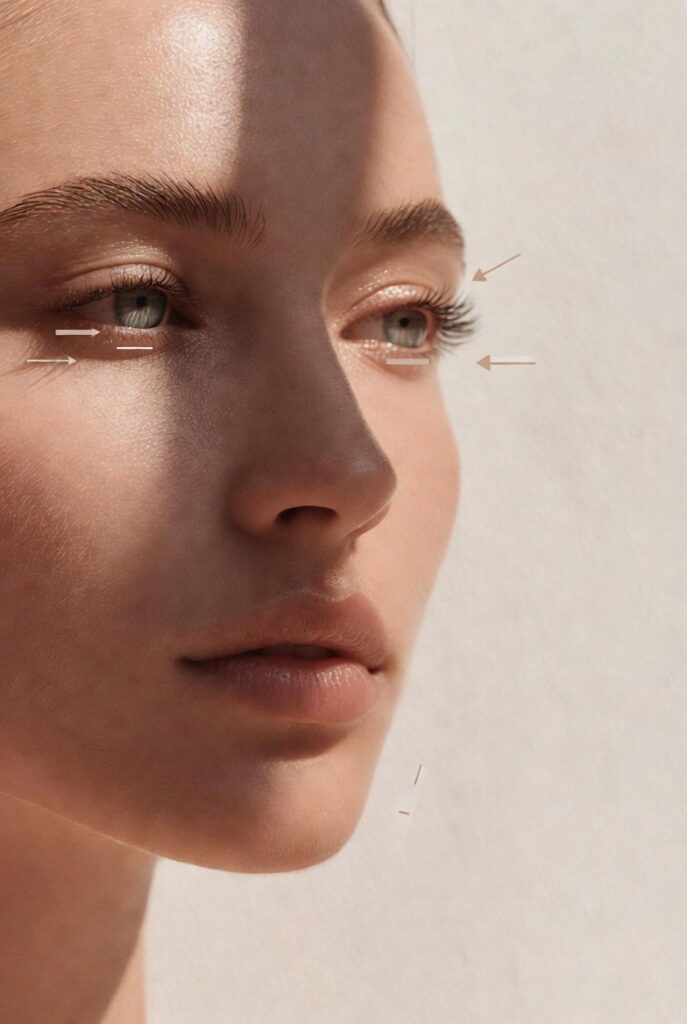
Before diving into techniques, it is helpful to understand what we mean by “uneven eyes.” Asymmetry can manifest in several ways. You might have one eye that is physically smaller than the other, or perhaps one eyelid is more hooded, making that eye appear smaller or closed off. Sometimes, the difference is in the height—one eye sits slightly lower on the face—or the angle of the outer corners.
These differences are usually caused by genetics, bone structure, or natural skin elasticity as we age. For some, it might be a result of a condition like ptosis (drooping eyelid). The goal of corrective makeup isn’t to mask your face or hide who you are. Instead, the aim is to create visual harmony. By playing with light and shadow, we can trick the observer’s eye into seeing a perfectly balanced pair.
Identify Your Type of Asymmetry
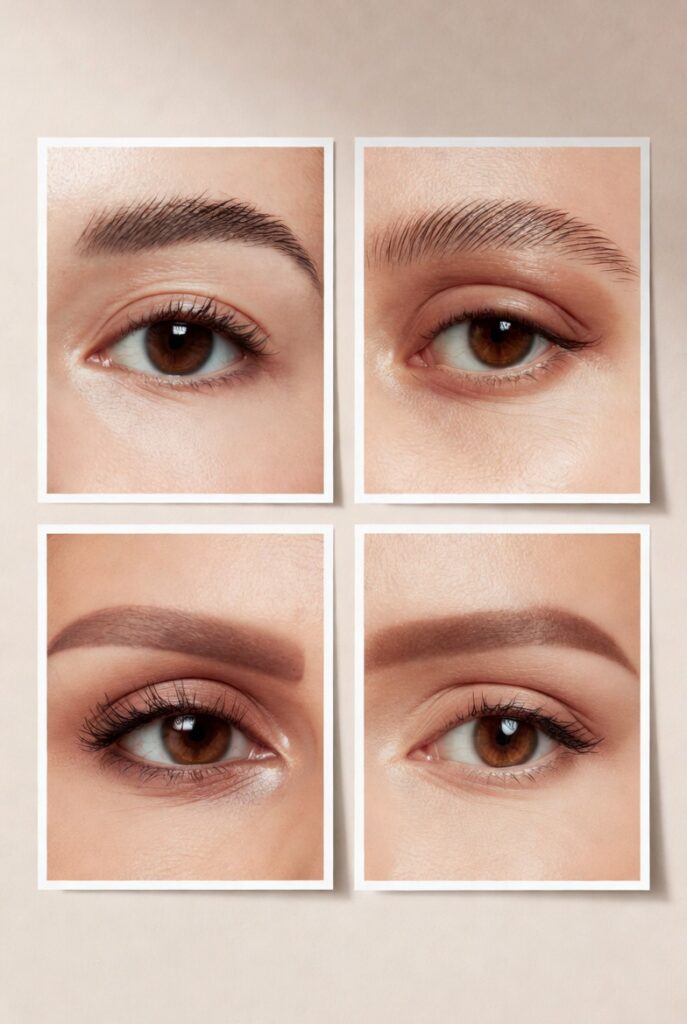
Correcting asymmetry starts with identifying exactly what kind of unevenness you have. Different types require different approaches, so take a moment to look in the mirror with a relaxed face.
- Size Difference: One eye appears noticeably wider or larger than the other.
- Eyelid Variance: One lid has a visible crease, while the other is hooded or monolid.
- Height Discrepancy: One eye sits lower on the face than the other.
- Shape Mismatch: One eye is rounder while the other is more almond-shaped or upturned.
Knowing your specific type allows you to choose the right technique. For example, if you have a height difference, you will focus on shadow placement to “lift” the lower eye. If you have a size difference, you will focus on “opening up” the smaller eye.
Essential Prep: Even Out the Canvas
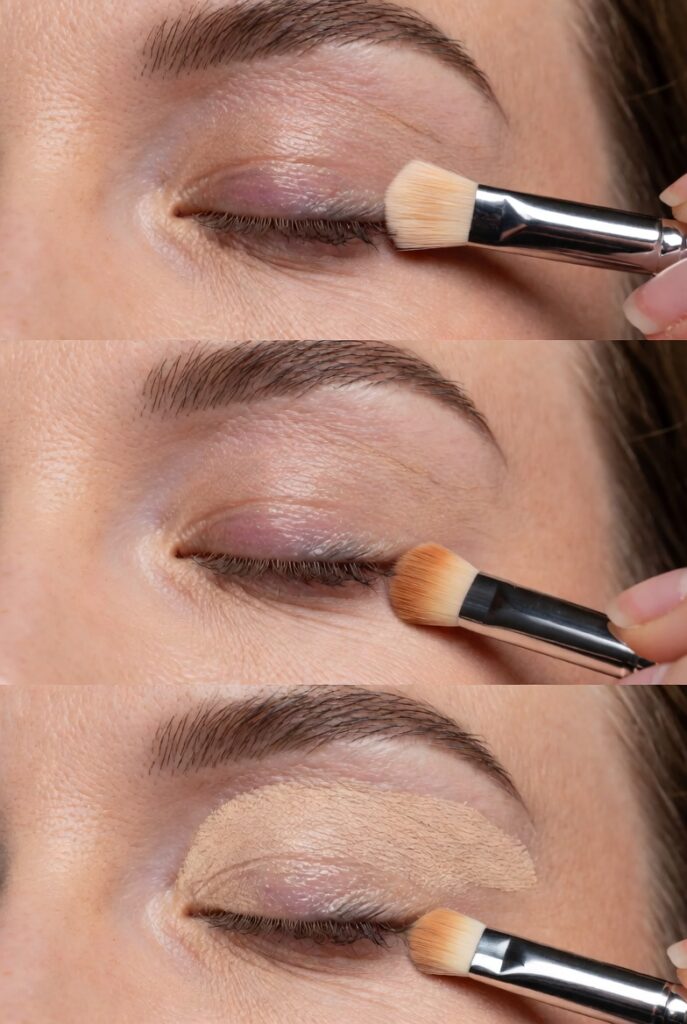
Great makeup starts with skin prep. When dealing with asymmetry, your base is crucial because shadows and discoloration can exaggerate unevenness.
Start by priming both lids. This ensures your eyeshadow stays put and the pigment shows up true to color. Next, use a color corrector if necessary. If the area under one eye is darker than the other, it can make that eye look smaller or sunken. Use a peach or orange corrector to neutralize the darkness.
Finally, be strategic with your concealer. Instead of applying it identically on both sides, look at where you need lift. On the lower or drooping eye, apply your concealer in an upward diagonal line towards the temple. This creates an instant visual lift before you even touch your eyeshadow.
Eyeshadow Techniques to Create Symmetry
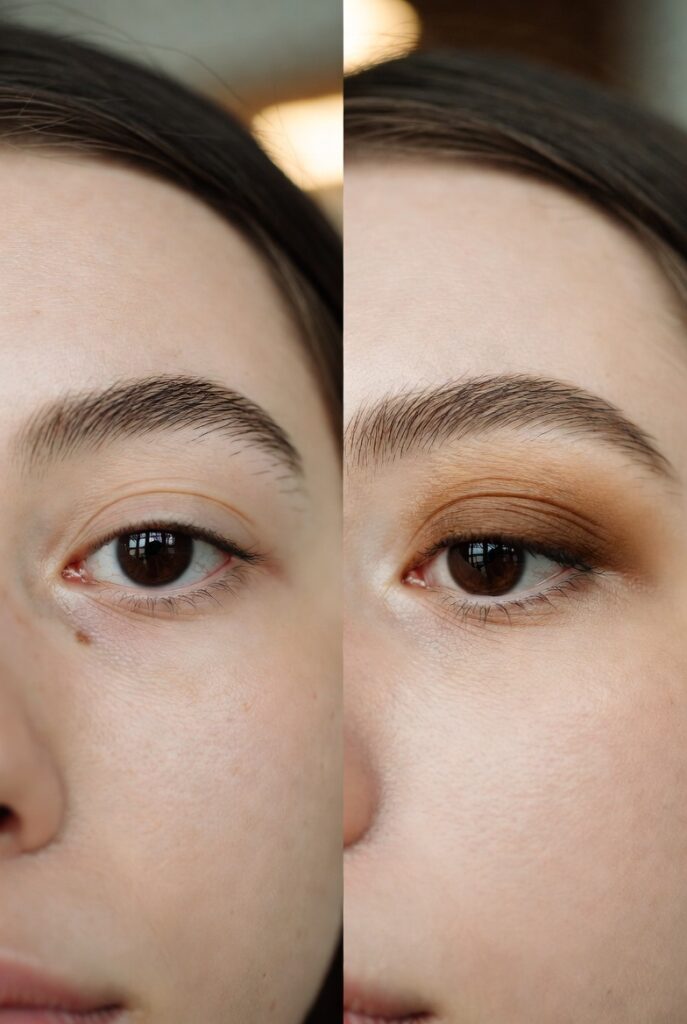
Shadow is your most powerful tool for reshaping. By using light shades to bring areas forward and dark shades to push areas back, you can completely alter the perceived shape of your eye.
Lift the Lower or Droopier Eye
If one eye sits lower or has a droopier outer corner, your main objective is to lift it visually. On the drooping side, blend your eyeshadow slightly higher towards the brow bone than you do on the other side. Focus the darkest color on the outer corner and blend it upwards and outwards toward the tail of your brow. This upward angle counteracts the natural droop.
Enlarge the Smaller Eye
To make a smaller eye look larger, light is your best friend. Apply a light, shimmering shade to the center of the lid and the inner corner of the smaller eye. This reflects light and “opens” the area.
You can also use a matte contour shade to create a false crease. Apply the shadow slightly above your natural crease line on the smaller eye. This tricks the viewer into thinking the eyelid is taller than it actually is.
Balance Different Eyelid Shapes
If you have one hooded eye and one visible lid, the goal is to make the visible lid space appear equal. On the hooded eye, bring your crease color up higher, onto the hood itself. Keep your eyes open while applying this color so you can see where the shadow needs to go to match the other eye. On the non-hooded eye, keep the shadow lower, closer to the natural crease.
Eyeliner Tricks to Adjust Eye Shape
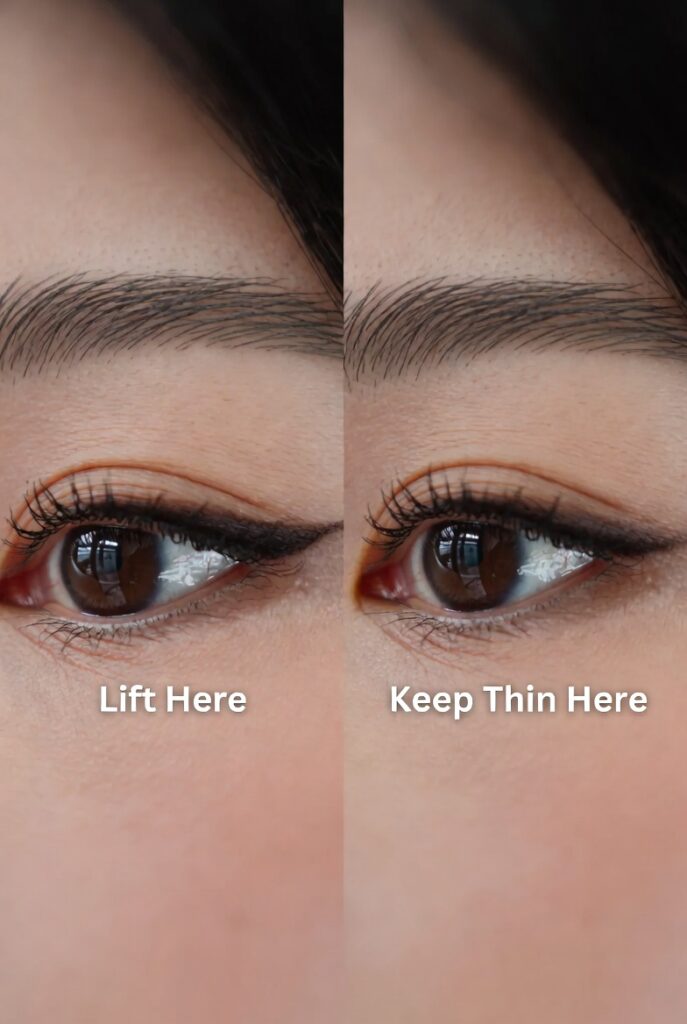
Eyeliner is often where people make the biggest mistakes with uneven eyes. The instinct is to match the liner thickness perfectly on both sides, but this actually highlights the asymmetry.
Correct Uneven Upper Lash Lines
To balance different eye sizes, you actually need to apply your eyeliner unevenly. On the smaller eye, apply a slightly thicker line. This adds definition and creates the illusion of a larger lash line. On the larger eye, keep the liner thinner.
If one eye droops, start your wing slightly earlier on that eye and angle it more sharply upwards. This “lifts” the outer corner to match the higher eye.
Tight-lining for Balance
Tight-lining (applying liner to the upper waterline) is excellent for adding definition without taking up lid space. This is particularly useful for the smaller eye. By darkening the upper waterline, you define the lashes without closing off the eye with a thick line on the lid.
Lower-Lash Liner Placement
Be careful with liner on the lower lash line, as it can close the eye off. If one eye is smaller, avoid dark liner on the lower waterline. Instead, use a nude or white pencil to open it up. You can apply a soft shadow to the lower lash line of the smaller eye, slightly lower than the natural lash line, to create the illusion of a larger eye.
Mascara & Lash Techniques
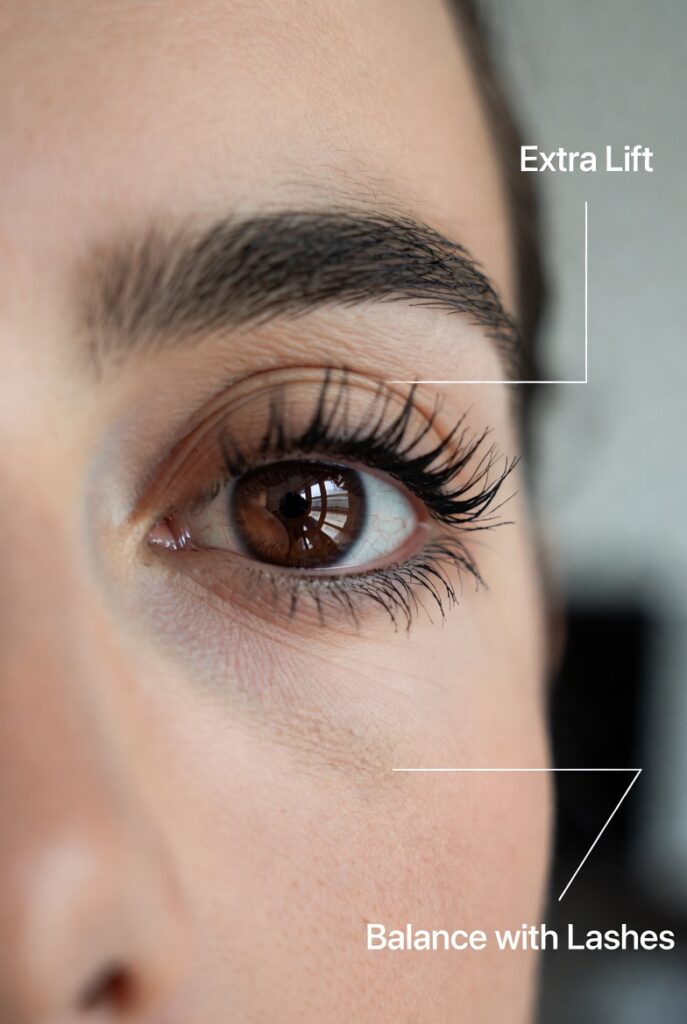
Lashes are the finishing touch that can distract from uneven shapes.
- Curl with purpose: Give the lashes on the smaller or droopier eye an extra firm curl. Curling opens the eye significantly.
- Strategic Mascara: Apply an extra coat of mascara to the center lashes of the smaller eye to open it up vertically. Focus on the outer lashes of the larger eye to elongate it.
- False Lashes: Individual lashes are superior to strip lashes for correction. Place slightly longer individuals on the outer corner of the droopy eye to lift it, or in the center of the small eye to open it.
Brow Shaping to Correct Asymmetry
Your brows frame your eyes, and if your brows are uneven, your eyes will look uneven too. If one eye is lower, the brow above it is often lower as well.
Use a brow pencil to slightly overline the top of the lower brow and underline the bottom of the higher brow. This brings them to a more equal level. You can also use a high-coverage concealer to carve out the bottom of the lower brow, creating a higher arch. Be careful not to over-pluck to force symmetry; makeup is a safer, non-permanent solution.
Highlighting & Contouring for Balanced Eyes
Just like you contour your cheekbones, you can contour your eye area. Use a matte bronzer or contour powder above the crease of the larger eye to make it recede slightly. Conversely, use a highlighter on the brow bone of the smaller or lower eye to bring it forward and lift it.
Avoid putting heavy shimmer on the puffy part of a hooded lid, as this will only emphasize the hood. Keep shimmers for the mobile lid and inner corners.
Quick Everyday Makeup Routine for Uneven Eyes
You don’t need an hour every morning to fix asymmetry. Here is a 5-minute routine:
- Prep: Apply primer and concealer.
- Shadow: Sweep a medium matte shade into the crease, bringing it higher on the smaller/hooded eye.
- Liner: Apply a thin line to the larger eye and a slightly thicker line to the smaller eye.
- Lashes: Curl both sides, focusing extra on the smaller eye. Apply mascara.
- Brows: lightly fill in brows, slightly lifting the arch on the lower side.
Final Tips & Common Mistakes
The most important tip is to constantly step back from the mirror. When we do makeup, we tend to get very close to the glass. However, no one looks at you from two inches away. Step back a few feet to check your symmetry from a conversational distance.
Also, avoid overcorrecting. Perfect symmetry is unnatural and can look uncanny. The goal is balance, not geometric perfection. If you try too hard to force them to match, you might end up with heavy, uneven makeup that looks worse than the natural asymmetry.
Finally, remember that you are your own harshest critic. The asymmetry that screams at you in the mirror is likely unnoticeable to everyone else. Use these tips to boost your confidence, but embrace your unique features.
Frequently Asked Questions
Can eyeliner make uneven eyes look worse?
Yes, if you apply thick, heavy eyeliner equally to both eyes, it can accentuate the size difference. The key is to adjust the thickness and angle of the liner to suit each individual eye shape.
Should I trim my eyelashes to match?
No, never trim your natural lashes to correct asymmetry. Instead, use mascara, curling techniques, or individual false lashes to create the illusion of balance.
Does false eyelash placement help with uneven eyes?
Absolutely. Placing false lashes slightly above the natural lash line on a drooping eyelid can create a significant lifting effect. Just make sure to fill the gap with black liner so it looks seamless.
Final Words
Mastering eye makeup for uneven eyes is about understanding light, shadow, and proportion. By customizing your application for each eye rather than copying and pasting the same technique, you can create a stunning, balanced look. Experiment with these tips, take a step back, and find the routine that makes you feel your best.